
RO Systems
Is RO Water Safe for Everyday Drinking?
RO drinking water is commonly used every day when the selected system is correctly installed and maintained. Actual performance depends on incoming water, filter condition, and system design.
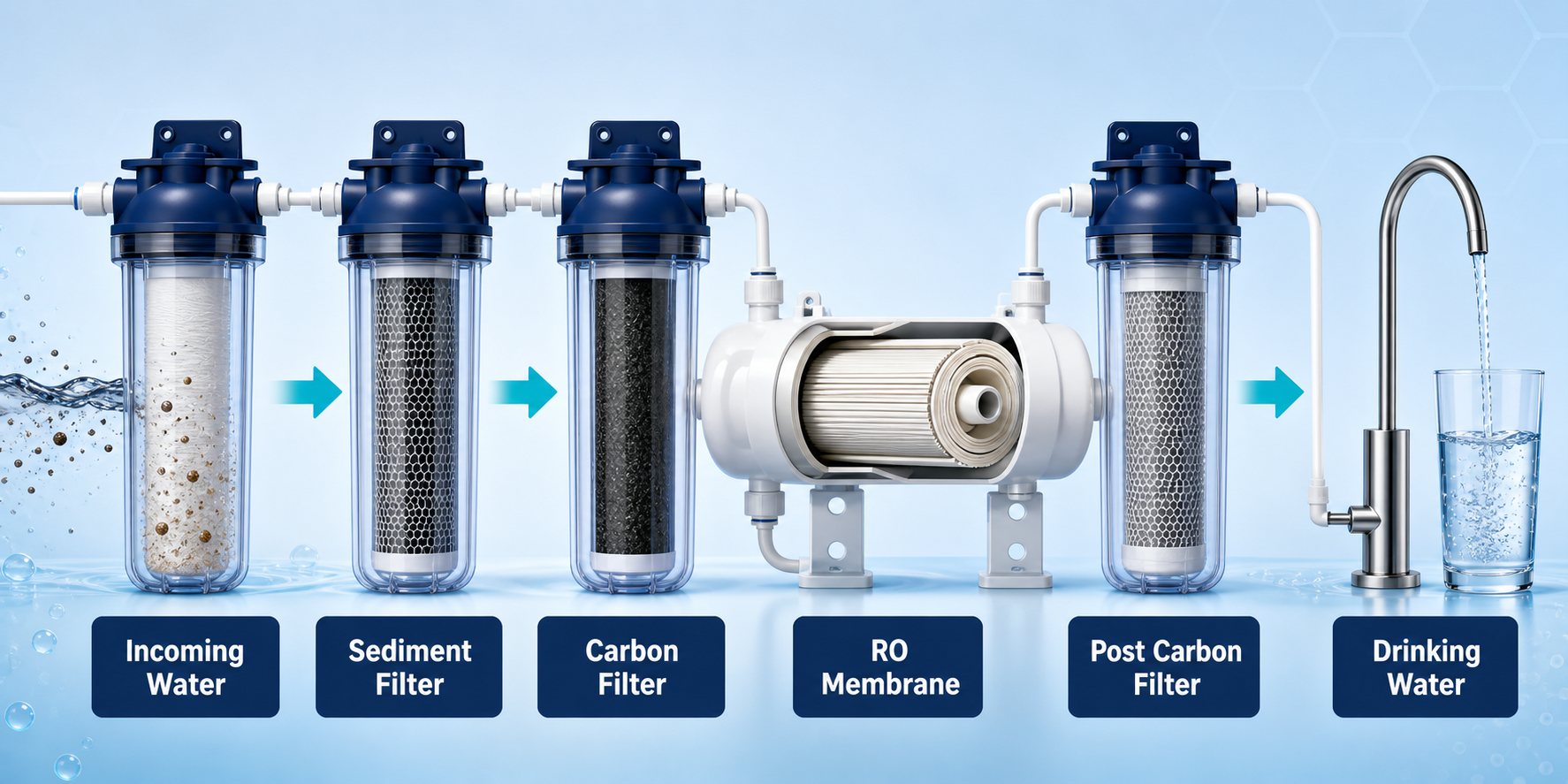
* AI-generated visual for illustrative purposes.
The visual follows water through a typical multi-stage RO drinking-water sequence. Each stage performs a different role, and actual performance depends on the selected system, incoming water quality, and maintenance.
What the system helps reduce
Sediment, chlorine, unwanted taste and odor, fine impurities, and many dissolved contaminants depending on the system and incoming water.
What reaches the user
Filtered drinking water with a cleaner taste, convenient supply, and controlled multi-stage filtration.
Key takeaways
What to Know
Scan the main ideas first. Open “Key points” only when you want the supporting details.
Swipe the cards to continue
A Practical Everyday-Drinking Answer
RO systems are designed to reduce selected unwanted substances through several filtration stages. They are not a promise that every substance is removed, and the right system depends on the water being treated.
Key points 3
- Incoming water quality and correct maintenance matter
- Use the manufacturer’s approved filters and service guidance
- Ask for model-specific test information when a particular concern must be addressed
Does RO Remove Too Many Minerals?
RO can reduce dissolved minerals along with other dissolved substances. Most dietary minerals normally come from food, not drinking water alone. If a selected dispenser includes a specified remineralization stage, its effect should be confirmed from the product information.
Key points 3
- RO may reduce dissolved minerals as part of the separation process
- A balanced diet is normally the main source of dietary minerals
- Confirm any remineralization claim from the selected model’s specifications
Why Can RO Water Taste Different?
Taste can change because chlorine, dissolved minerals, and odor-causing compounds influence how water tastes. A post-carbon stage commonly provides final taste polishing.
Key points 3
- Reduced chlorine and dissolved substances can change the taste profile
- A post-carbon filter commonly provides final taste and odor polishing
- An unusual new taste or odor can be a reason to inspect the filters and system
Keep the Whole System Working
Filter condition, membrane condition, sanitation, and the incoming supply all influence delivered water. Treat the system as a maintained appliance rather than a fit-and-forget device.
Key points 3
- Replace approved filters according to the model and operating conditions
- Keep the tank, tubing, outlet, and service areas hygienic
- Check unusual flow, taste, odor, leakage, or warning indicators promptly