
RO Systems
Maintaining Your RO Dispenser: What Owners Should Know
RO dispenser ownership is straightforward when maintenance follows the selected model, water conditions, and usage. Replacement timing is not universal.
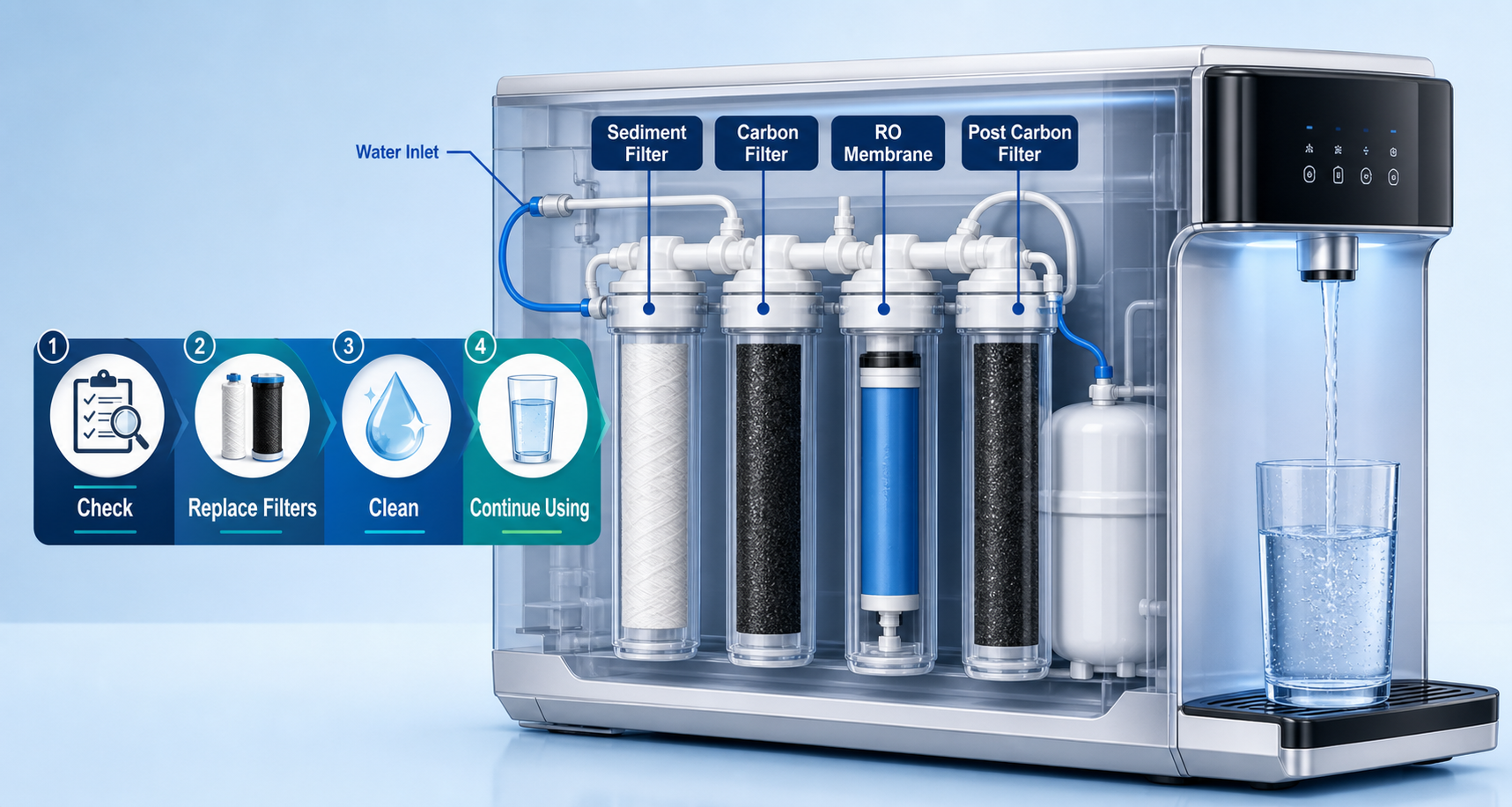
* AI-generated visual for illustrative purposes.
Routine maintenance helps an RO dispenser deliver consistent flow and pleasant-tasting water. The exact filter arrangement and service schedule vary by model, incoming water quality, and daily use, so maintenance should combine regular observation with the selected manufacturer’s instructions.
What owners should monitor
Notice changes in flow, taste or odor, filter-status indicators, visible leaks, unusual operation, and long periods without use. A change is a reason to check the system and its instructions, not automatic proof that the dispenser has failed.
What routine care should include
Use model-approved replacement filters, clean the dispensing outlet and accessible service areas, keep a record of completed work, and follow the specified sanitation and restart procedure after servicing.
Key takeaways
What to Know
Scan the main ideas first. Open “Key points” only when you want the supporting details.
Swipe the cards to continue
Why Filters Need Replacement
Sediment filters capture particles, carbon filters help reduce chlorine and taste or odor compounds, the RO membrane performs the main separation, and post-carbon provides final polishing. The membrane often lasts longer than pre-filters because pretreatment helps protect it.
Key points 3
- Water consumption, water quality, filter type, and manufacturer guidance affect service life
- Use correct approved replacement filters
- General replacement examples are guidance only, not a universal schedule
Signs Your RO Dispenser May Need Attention
Slower flow, an unusual taste or odor, a replacement indicator, long periods without use, or unusual operating behaviour are signals to check the system. They do not automatically mean the dispenser is broken.
Key points 3
- Check the user manual and filter status first
- Arrange service when the selected model’s guidance recommends it
- Do not ignore visible leaks or electrical warnings
Regular Care Supports Consistent Use
Clean the dispensing area as instructed, replace filters correctly, and keep service records. Correct maintenance protects convenience and helps the system perform as intended.
Key points 3
- Clean the outlet and accessible service areas as instructed
- Record filter replacements and completed service work
- Follow the selected model’s sanitation and restart procedure after servicing